Age of Origins
- 4.1
- Rating
- 50.00M
- Installs
- Free
- Price

 Analysis by App-foxy
I spent time with Age of Origins as a mobile strategy game built around surviving a zombie collapse, organizing shelters, and making decisions that gradually expand your responsibility. Its basic premise is easy to understand, but the experience is less about one dramatic battle and more about keeping several priorities moving without letting the settlement fall behind. That makes it a better fit for players who enjoy planning, checking progress, and returning to a developing base than for anyone looking for a quick arcade-style zombie game.
The game is free to install, and CamelStudio has positioned it for a broad mobile audience. It is rated Teen, runs on Android 7.0 and later, and the current version is 1.3.828. The large player base is reflected in its average rating of 4.1 from around 548 thousand ratings, with more than 50 million installs. Those figures suggest a well-established game rather than a short-lived experiment, although popularity does not remove the need to decide whether its pacing suits you.
How the early game turns survival into a routine
The opening hours work best when I treat them as a sequence of practical goals instead of waiting for one grand objective to define the whole game. Establishing a shelter gives the early play a clear direction: improve what keeps the community functioning, prepare for danger, and make sure each new opportunity supports the next one. The zombie setting gives those tasks context, so resource decisions feel connected to survival rather than being abstract menu management.
You May Also Like

 Blood Strike: 2.5 Anniversary
Blood Strike’s Loadouts Turn Every Drop Into a Tactical Gamble
A close look at Blood Strike’s custom loadouts: how fast access to signature weapons reshapes its battle royale rhythm, rewards preparation, and narrows the gap between fights.

 Pandora - Music & Podcasts
Pandora’s Music Is Easy to Start, but Harder to Recover
Pandora’s strength is its low-effort path from a seed to a station. Its weak spot is how much confidence it asks you to place in connection, setup, and quiet recovery.

 8 Ball Pool
 Is Built on Rivalries, Rematches, and Routine
A close look at the rivalries, rematches, shared routines, and unanswered safety questions that turn a quick pool match into a persistent mobile community.

 Samsung Music
’s Quiet Strength Is Playing What You Already Own
Its reach comes less from spectacle than from dependable access to a personal library. That simplicity is both the app’s strongest retention engine and its ceiling.

 AccuWeather: Weather Radar
AccuWeather Review: A Quick, Clear Forecast for Everyday Decisions
For everyday plans, the best forecast is the one you can understand quickly. AccuWeather makes rain timing, radar, and local conditions easy to act on, with a few trade-offs.

 Hill Climb Racing
Why Hill Climb Racing Still Turns Crashes Into One More Run
A tiny car, a bumpy hill and one more upgrade: Hill Climb Racing keeps resurfacing because its simple chaos makes every near-miss feel personal.
More From Our News Desk



What I like about this structure is that progress usually has a visible purpose. A stronger shelter is not merely a higher number; it represents more room to plan and a better chance of handling the threats around it. The game encourages me to look at the settlement as a chain of needs. If I focus too heavily on one improvement while ignoring another, the whole rhythm can slow down. That creates a useful early lesson: expansion is only valuable when the supporting parts can keep up.
For a new player, I recommend resisting the urge to spend every available resource immediately. I found it more comfortable to keep a small reserve for the next meaningful improvement or an unexpected demand. This is one of the first non-obvious choices in the game. The fastest-looking upgrade is not always the best one if it leaves the rest of the shelter unable to support it.
The early goals also make the game approachable for people who are new to mobile strategy. I never needed to understand every layer at once to begin making sensible decisions. The zombie theme supplies motivation, while the settlement gives me something concrete to inspect whenever I return. Players who prefer a tightly scripted campaign may find the structure less dramatic, but those who enjoy building momentum can settle into it quickly.
What progress feels like from one session to the next
The most satisfying progress signals are the ones I can see without relying only on a level number. A shelter that has developed, a new responsibility becoming available, or a previously demanding task becoming manageable all tell me that earlier decisions mattered. These signals help the game avoid feeling like an endless list of identical taps, especially when I pause to compare the current state with where I started.
I also pay attention to how much of my progress comes from preparation rather than reaction. In a weaker session, I may simply chase whatever is immediately available. In a better one, I have already considered what the next stage will require and arranged my actions accordingly. That difference gives the strategy category some substance. The game rewards awareness of timing, not just constant activity.
One useful habit is to group decisions by purpose. I first ask whether an action improves immediate survival, unlocks a more useful option, or only provides a short-term boost. When several choices compete for attention, this simple test prevents me from treating every upgrade as equally urgent. It is especially helpful during busy periods, when the interface presents more possible tasks than I can comfortably handle.
The sense of advancement is not always fast, and that is deliberate. Some players will appreciate having a reason to return later, while others will interpret the pauses as friction. I fell somewhere in the middle: the slower moments gave me time to reconsider my priorities, but they also made it clear that the game expects patience. If you want every session to produce a major transformation, this may feel restrained.
Challenge, mistakes, and the shape of the difficulty curve
The challenge comes less from a single difficult control scheme and more from balancing competing needs. It is easy to understand what I want to improve; it is harder to decide what should come first. That distinction matters. A strategy game can be technically simple while still asking for careful judgment, and this one often creates pressure through opportunity cost rather than complicated input.
Early mistakes are generally useful because they show how connected the settlement’s needs are. Spending too freely can leave me waiting for the next chance to move forward. Concentrating on one area can make another feel neglected. I learned more from those slowdowns than I would have from a system that simply handed out constant rewards. The game’s challenge becomes clearer once I stop treating each task as an isolated objective.
My practical advice is to avoid making decisions solely because they are available. Before committing resources, I look at whether the action will improve my next few moves or merely make the current screen look busier. This is a small but important change in mindset. It helps preserve flexibility and makes the difficulty feel more manageable without removing the need to plan.
The curve is most comfortable for players who enjoy gradual escalation. It does not feel designed around instant mastery or repeated high-intensity encounters. Instead, the pressure builds as the settlement becomes more demanding and the consequences of poor prioritization become easier to notice. That pacing can be satisfying for long-term players, but it may frustrate someone who expects the opening to deliver its biggest challenges immediately.
Where the game asks for patience and spending discipline
Because the game is free, its long-term design includes optional in-app purchases priced from $0.99 to $394.99 per item. That range is important to understand before starting. I can approach the game without paying, but the presence of purchases means I need to be comfortable with a progression model where convenience and acceleration may be offered alongside ordinary play.
This is where the game’s retention pressure becomes most noticeable. A developing shelter naturally gives me reasons to return, and waiting between meaningful steps can make a paid shortcut look attractive. I recommend deciding in advance whether you are willing to spend anything. Without that boundary, a small purchase can feel like a harmless way to remove one delay, followed by another decision when the next delay appears.
My preferred approach is to treat the free route as the main test. I play long enough to see whether the planning loop itself is enjoyable before considering a purchase. If the ordinary decisions already feel rewarding, optional spending can remain just that: optional. If the waiting and resource pressure are the only parts I dislike, paying may not solve the underlying mismatch with the game’s pacing.
This design will suit players who enjoy a persistent strategy routine and do not mind returning to check on gradual progress. It is less suitable for people who want a complete experience in one sitting or who dislike any game that places high-priced optional items near a long-term progression loop. The distinction is not about whether the game can be played for free; it is about whether its rhythm remains enjoyable when I choose not to accelerate it.
A realistic daily routine for different kinds of players
On a normal day, I can imagine opening the game during a short break to review the shelter, decide which improvement deserves attention, and leave with a clear next step. Later, I return with more time and make the larger decisions that require comparison. That split works well because the game’s structure supports both quick check-ins and more deliberate planning, rather than demanding that every session be long.
For a player with limited time, the best routine is to choose one priority before opening the app. If the goal is vague, it is easy to bounce between tasks and finish without feeling that anything important happened. A focused visit—such as preparing the settlement for its next challenge or correcting an imbalance—makes the session more satisfying and reduces unnecessary spending of resources.
For a more committed player, I would keep a mental record of which improvements have produced the biggest practical benefit. This helps separate genuine progress from cosmetic busyness. It also makes the strategy more personal: two players may face similar choices but value them differently depending on whether they prefer safety, expansion, or faster access to new possibilities.
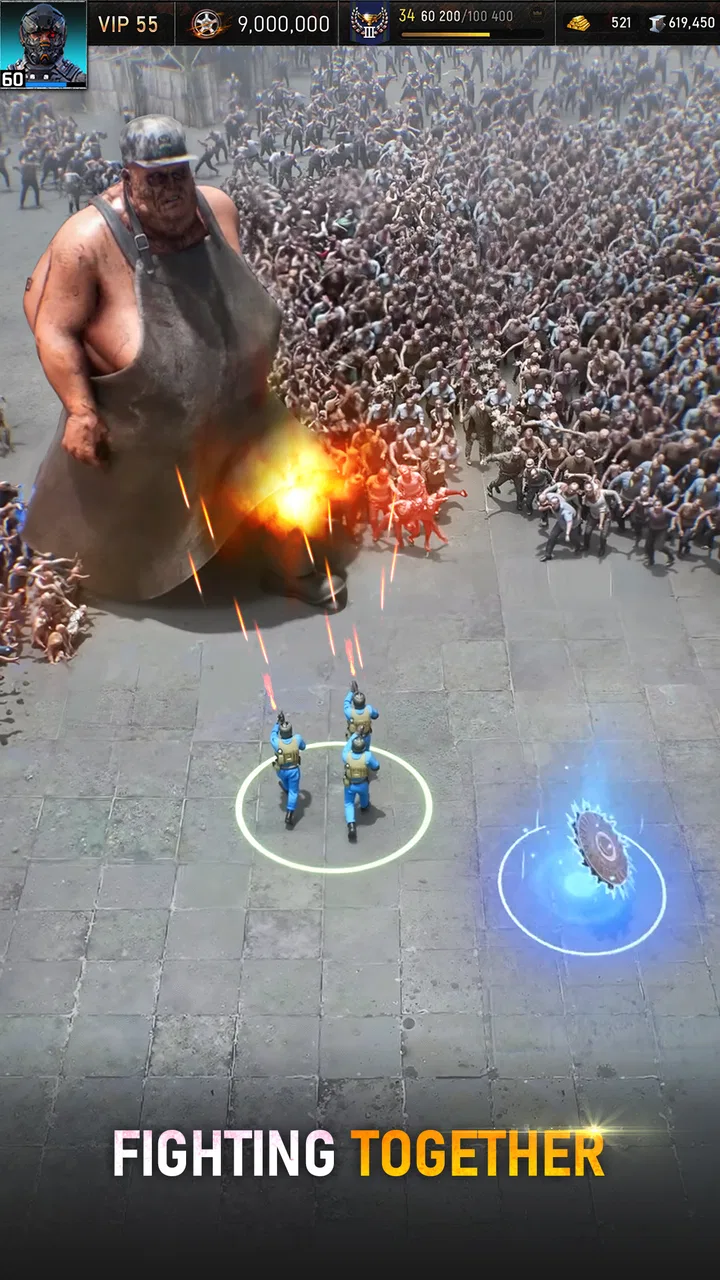
The game is not the right choice for someone who wants direct, moment-to-moment zombie combat to be the main attraction. Its appeal lies in leadership and development, not simply aiming at enemies. Players seeking a quick puzzle, a self-contained campaign, or a purely offline-feeling experience may be happier elsewhere in the strategy category. Here, the ongoing settlement is the point.
How it compares with familiar strategy alternatives
Compared with a traditional tower-defense game, this experience places more emphasis on the broader condition of a settlement than on defending one fixed lane during a short match. That makes the decisions feel more cumulative, but it also means the payoff is slower. Someone who enjoys immediate tactical clarity may prefer tower defense, while someone who likes watching a community develop will likely find this approach more engaging.
It also differs from a compact puzzle strategy game. Puzzle games usually make the consequences of one move immediate and keep the session tightly contained. Here, my decisions matter across a longer rhythm of preparation and return visits. The trade-off is clear: Age of Origins offers more room for sustained development, while a puzzle alternative may provide cleaner sessions with less waiting and fewer competing priorities.
Against a purely decorative base-building game, the zombie setting gives the improvements a stronger sense of urgency. I am not only arranging a settlement to make it look complete; I am thinking about whether it can support the next stage of survival. That said, players who want relaxed decoration without pressure may find the strategic demands unnecessary.
The game’s strongest comparative advantage is its combination of a recognizable survival theme and a long-form management loop. Its main weakness is the same feature: the longer structure asks for patience, repeated attention, and restraint around optional purchases. I would choose it over a short strategy title when I want an ongoing project, but not when I have only a few minutes and need a fully resolved challenge.
Who should play and who should skip it
I recommend it to players who enjoy watching a plan develop over time, making trade-offs, and returning to a world that has not finished changing. It is particularly appealing if the idea of leading survivors through a zombie crisis sounds more interesting than controlling a single hero. The shelter gives each decision a practical frame, and the gradual goals provide enough direction without making every choice feel predetermined.
I would be more cautious about recommending it to players who dislike timers, slow progression, or games that repeatedly invite optional spending. It may also disappoint anyone expecting a fast, combat-first zombie experience. The Teen rating is another useful signal for families: this is not positioned as a children’s game, so parents should consider whether its themes and purchase structure fit the intended player.
Android users with version 7.0 or newer can run it, and the free entry point makes trying the core loop straightforward. I would still approach the first session as a test of patience rather than a race to advance. Notice whether choosing priorities feels satisfying, whether returning to the shelter feels worthwhile, and whether the gradual pace creates anticipation or irritation. Those reactions will tell you more than the zombie theme alone.
My verdict on its long-term progression
After playing it, I see Age of Origins as a persistent strategy game whose goals, unlocks, and challenges are designed to keep the shelter moving rather than deliver constant bursts of excitement. Its strongest moments come when I understand why a decision matters and can see the settlement becoming more capable as a result. The progression works because it gives me a continuing problem to solve, not because every step is immediately dramatic.
The experience is not frictionless. The pace can be slow, the number of competing priorities can make a session feel busy, and the broad in-app purchase range requires self-control. Those are meaningful limitations, especially for players who prefer fixed-price games or quick tactical rounds. I would not recommend it blindly to every zombie fan.
For me, the progression earns its place when I play with a plan: preserve resources, choose improvements for their future value, and accept that some returns will be about preparation rather than instant rewards. If that sounds enjoyable, CamelStudio’s game offers a substantial long-term routine and enough strategic tension to justify returning. If you want immediate action with a clear finish line, a smaller strategy alternative will probably serve you better.
Overall, I would recommend trying it free and judging the rhythm before spending anything. The key question is whether gradual shelter management feels like meaningful leadership to you. If it does, the game can become a dependable strategy companion; if it does not, its long-term pacing will likely feel more like a demand than an invitation.
FAQs for Age of Origins
01What is Age of Origins, and what type of gameplay can I expect?
Age of Origins is a strategy game that combines elements of base-building, resource management, and tactical combat. Players can expect to build and upgrade their base, train armies, form alliances, and defend against zombie hordes. The game emphasizes strategic planning and cooperation with other players to survive and expand in a post-apocalyptic world.
02Is Age of Origins free to play, or are there in-app purchases?
Age of Origins is free to download and play on both Android and iOS platforms. However, it includes in-app purchases that allow players to buy resources, speed up progress, or unlock special items. While these purchases can enhance the gameplay experience, they are not mandatory for progression.
03What are the system requirements for Age of Origins on mobile devices?
Age of Origins requires a stable internet connection and typically runs on devices with Android 4.1 or higher, or iOS 9.0 or later. It’s advisable to have a device with at least 2GB of RAM for smooth gameplay. Always check the app store for the latest compatibility details.
04How does the multiplayer aspect of Age of Origins work?
In Age of Origins, players can form alliances with others globally. These alliances are crucial for defense and resource sharing. The game features real-time PvP battles, allowing players to compete for dominance. Communication and strategy within alliances are key to thriving in the game's competitive environment.
05Are there any tips for beginners starting in Age of Origins?
For beginners, focusing on building a strong base and upgrading essential structures is crucial. Joining an active alliance early can provide strategic advantages and resources. Understanding the zombie threat and prioritizing defense can prevent early setbacks. Exploring community forums and guides can also offer valuable insights for new players.
Pros
- Engaging strategy gameplay.
- Rich graphics and detailed design.
- Frequent updates and events.
- Multiplayer alliances enhance fun.
- Variety of units and upgrades.
Cons
- In-app purchases can be costly.
- Requires consistent internet connection.
- Some features are complex for beginners.
- May drain battery quickly on older devices.
- Ads can be intrusive at times.

Age of Origins
Gallery